

Enterprise AI Infrastructure, Built on NVIDIA
From sizing your first GPU cluster to running it in production — Layots Technologies designs, supplies, deploys, and manages NVIDIA DGX and HGX systems, NVIDIA AI Enterprise with NIM, GPU cloud, and RTX virtual workstations.
Most GPU Projects Stall Before They Reach Production
Buying GPUs is the easy part. The projects that fail do so because nobody owned the power envelope, the interconnect, the licensing, or the day-two operations.
Power and cooling gaps
A rack specified for 6 kW cannot host a GPU node drawing 12 kW. The problem surfaces after delivery, when it is expensive to fix.
Idle, unscheduled GPUs
Without quotas and scheduling, a handful of teams monopolise the cluster while measured utilisation sits under 30 percent.
No path to production
Models are trained in notebooks and never reach a governed, monitored inference endpoint the business can rely on.
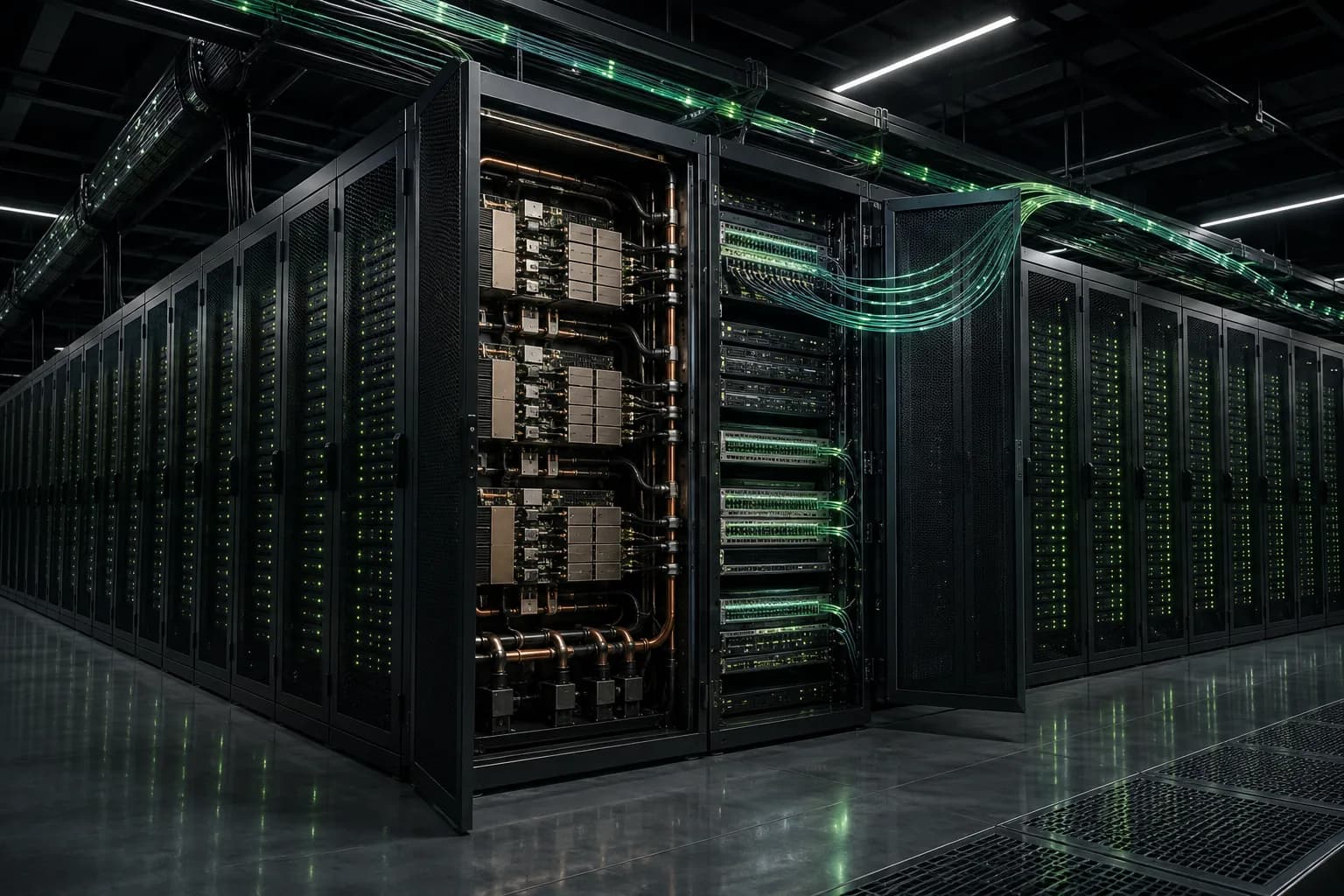
Racked, cabled, validated
We deliver the whole environment, not a parts list
Power and cooling survey, fabric design, burn-in and acceptance testing — handed over as infrastructure your team can actually run.
Our NVIDIA Capabilities
Four connected practice areas that take you from GPU selection through to governed production AI.
DGX & GPU Infrastructure
Factory-integrated DGX systems and custom HGX builds, racked, cabled, and validated as production AI infrastructure.
- DGX, HGX, and OEM GPU server specification and supply
- NVLink, NVSwitch, InfiniBand, and Spectrum-X fabric design
- Power, cooling, and floor-loading assessment before purchase
- Rack, stack, burn-in, and acceptance testing
NVIDIA AI Enterprise & NIM
The licensed software layer that turns raw GPUs into a governed, supported AI platform with production inference endpoints.
- NVIDIA AI Enterprise licensing, deployment, and lifecycle
- NIM inference microservices for private model endpoints
- Base Command and Run:ai style scheduling and quotas
- MLOps pipelines, model registry, and GPU observability
GPU Cloud & Hybrid
Burst to cloud GPUs when demand spikes, keep steady-state training on owned hardware, and control the spend across both.
- GPU capacity on Azure, AWS, and Oracle Cloud Infrastructure
- Hybrid burst architecture with consistent tooling
- Reserved versus on-demand modelling and commitment planning
- GPU FinOps: utilisation tracking, right-sizing, idle reclamation
vGPU & Virtual Workstations
RTX vWS and Omniverse-ready virtual desktops that give designers and engineers workstation-class graphics from anywhere.
- RTX vWS profile sizing for CAD, CAE, BIM, and DCC workloads
- Hypervisor integration with VMware, Citrix, and Azure
- Omniverse and digital twin workstation enablement
- vGPU licence management and entitlement tracking

From trained model to production endpoint
Private inference, inside your environment
NVIDIA AI Enterprise and NIM microservices give you governed, supported model endpoints — without inference data ever leaving your estate.
On-Premises GPUs vs. GPU Cloud: How to Choose
The right answer depends on utilisation, data residency, and how predictable your workload is.
| Factor | On-Premises (DGX / HGX) | GPU Cloud |
|---|---|---|
| Best when | Sustained utilisation above 60–70% | Bursty, experimental, or short-lived workloads |
| Cost shape | Capital expenditure, lower cost per GPU-hour at scale | Operating expenditure, no upfront outlay |
| Time to start | 6–20 weeks including procurement | Minutes to hours |
| Data residency | Full control; data never leaves your facility | Depends on region and provider controls |
| Scaling limit | Bounded by power, cooling, and floor space | Bounded by quota and availability |
Layots models the breakeven point against your actual workload profile before you commit capital.
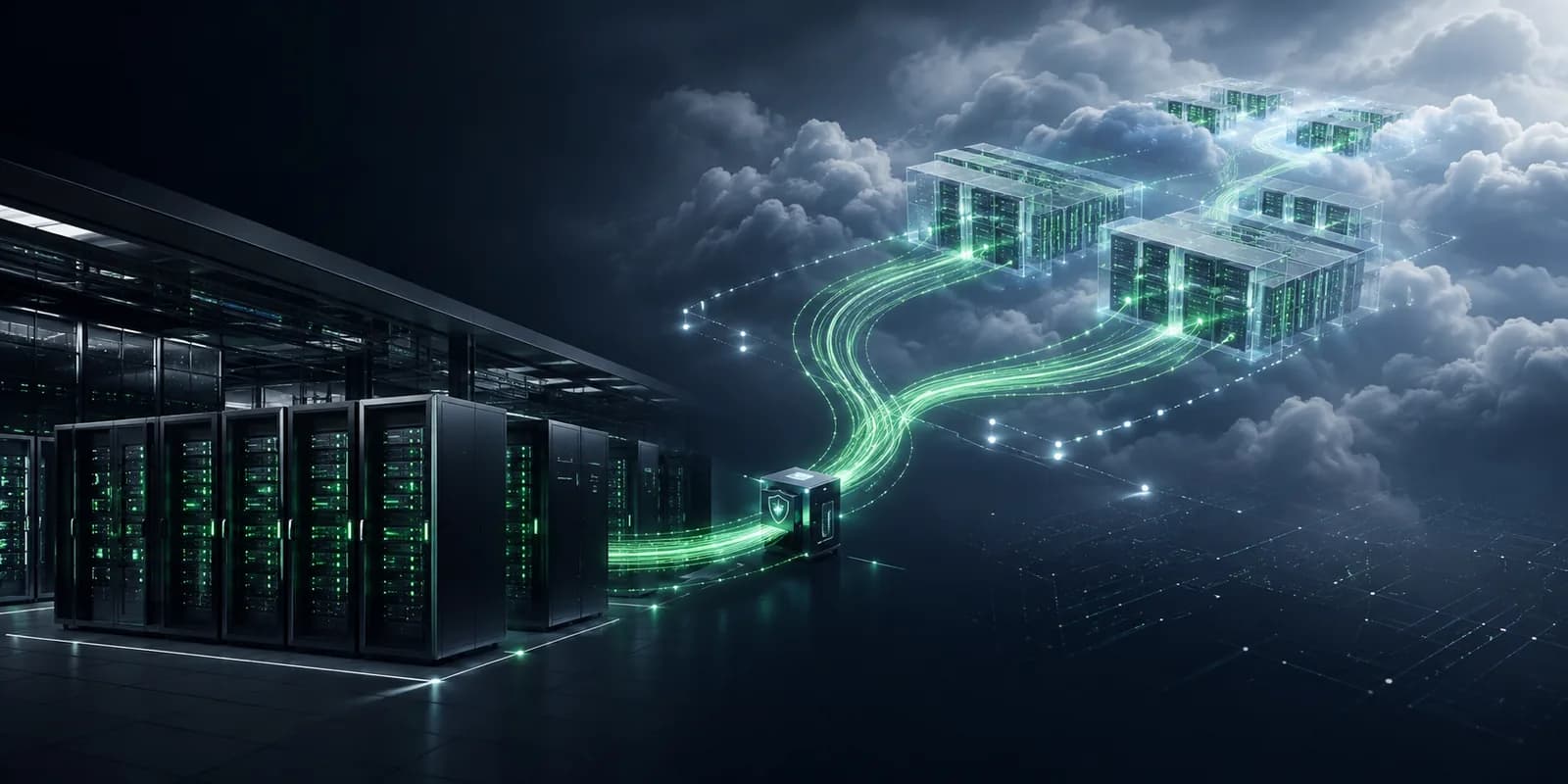
Own the baseline, rent the peak
One estate, spanning your floor and the cloud
Steady-state training on hardware you own, burst capacity on Azure, AWS or OCI, and a single view of what all of it costs.
What You Gain with Layots
Higher GPU utilisation
Scheduling, quotas, and observability that lift measured utilisation instead of adding more hardware.
Predictable GPU spend
FinOps discipline applied to GPUs: right-sizing, commitment planning, and idle reclamation.
Data stays yours
Private model endpoints via NIM so inference traffic never leaves your environment.
Faster time to value
Validated reference architectures cut the distance between purchase order and first production workload.
Our Delivery Lifecycle
One accountable team from workload assessment through to day-two operations.
Assess
Workload profiling, GPU sizing, power and cooling survey, and a build-versus-rent cost model.
Design
Reference architecture covering compute, fabric, storage, software licensing, and security controls.
Deploy
Supply, rack, cable, and validate. Cluster and software stack handed over against an acceptance test plan.
Operate
Monitoring, scheduling, patching, capacity planning, and GPU FinOps under an agreed SLA.
NVIDIA Solutions: Frequently Asked Questions
Straight answers to what enterprise teams ask us before starting a GPU project.
What is NVIDIA AI Enterprise?
What is the difference between NVIDIA DGX and a standard GPU server?
How long does an enterprise GPU cluster deployment take?
Should we buy GPUs on-premises or rent GPU cloud capacity?
How much power and cooling does a GPU cluster need?
What is NVIDIA NIM?
Can NVIDIA vGPU support CAD and engineering workstations?
Is Layots Technologies an NVIDIA partner?
Insights
More on Enterprise AI Infrastructure
Securing the AI Startup: A Practical Zero-Trust Infrastructure Blueprint
How Layots helps AI startups protect models, data, GPU platforms, cloud services, and customer trust with security built for growth.
Read article Cloud ComputingHow AI Startups Can Scale GPU Compute Without Slowing Innovation
A practical guide to building flexible, cost-efficient GPU infrastructure for model training, fine-tuning, and inference with Layots.
Read article AIOps & AutomationHow Layots Helps Companies Meet Diverse GPU Demands with NVIDIA RTX
Explore how Layots assesses and designs NVIDIA RTX GPU platforms for AI startups, aerospace, manufacturing, media, healthcare, and enterprise analytics workloads.
Read articleTalk to Our GPU Architects
Tell us about your workload and we will come back with an indicative GPU sizing, a power and cooling view, and a build-versus-rent cost comparison.